MaterialsMaterial Guide
How Many Bags of Mulch Are in a Cubic Yard?
One cubic yard is 27 cubic feet: 18 bags at 1.5 cu ft, 13.5 at 2 cu ft (buy 14), or 9 at 3 cu ft. Bag size matters more than bag count.
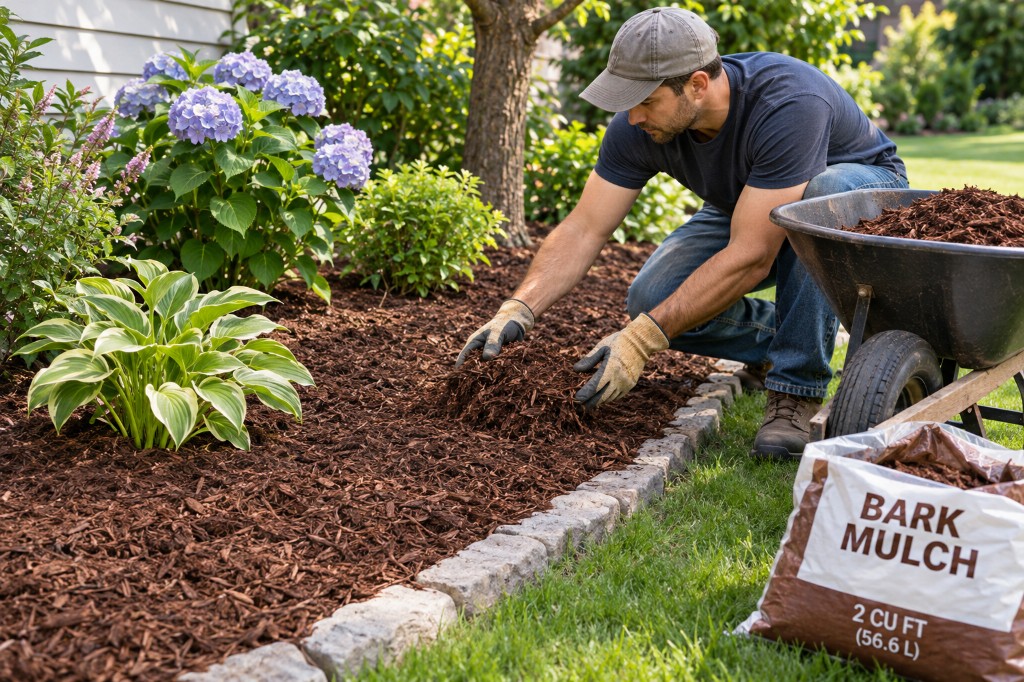
One cubic yard contains 27 cubic feet. That equals 18 bags at 1.5 cu ft each, 13.5 bags at 2 cu ft each, or 9 bags at 3 cu ft each. Because you buy whole bags, matching or exceeding one cubic yard with 2-cu-ft bags requires 14 bags.
Bag size matters more than bag count. “10 bags of mulch” is meaningless without knowing the volume per bag.
The 27-cubic-foot relationship
1 yd³ = 27 ft³
bags to meet or exceed 1 yd³ = ceil(27 ÷ bag volume in cu ft)
Bag-size table
Exact volume equivalents before purchase rounding, using the FixUpWise calculator’s common U.S. package presets:
| Bag volume | 27 ÷ bag volume | Whole bags for ≥ 1 yd³ |
|---|---|---|
| 1.5 cu ft | 18 | 18 |
| 2 cu ft | 13.5 | 14 |
| 3 cu ft | 9 | 9 |
Those presets are common package sizes — not every product on the shelf.
Why 2-cu-ft bags need 14, not 13
27 ÷ 2 = 13.5 volume-equivalents. Thirteen bags hold 26 cu ft — short of a yard. Fourteen bags hold 28 cu ft, which meets or exceeds one cubic yard.
What to check on packaging
- Cubic-foot volume (or equivalent)
- Product type / mulch material
- Any note that volume is approximate when fluffed or settled
Bags vs bulk
For a real bed, compute project volume first, then divide by bag size and round up — you rarely buy exactly one yard. Example: a 10×10 bed at 2 in ≈ 16.67 cu ft → 9 bags at 2 cu ft.
Bulk deliveries are ordered in cubic yards. Bag math is for packaged product. Coverage of that yard still depends on depth: how much area a yard covers. Project formula: how much mulch do I need?.
Related reading
Sources
- FixUpWise Mulch Calculator package-volume presetsUses common U.S. bag volume examples of 1.5, 2.0, and 3.0 cu ft; not universal product sizes